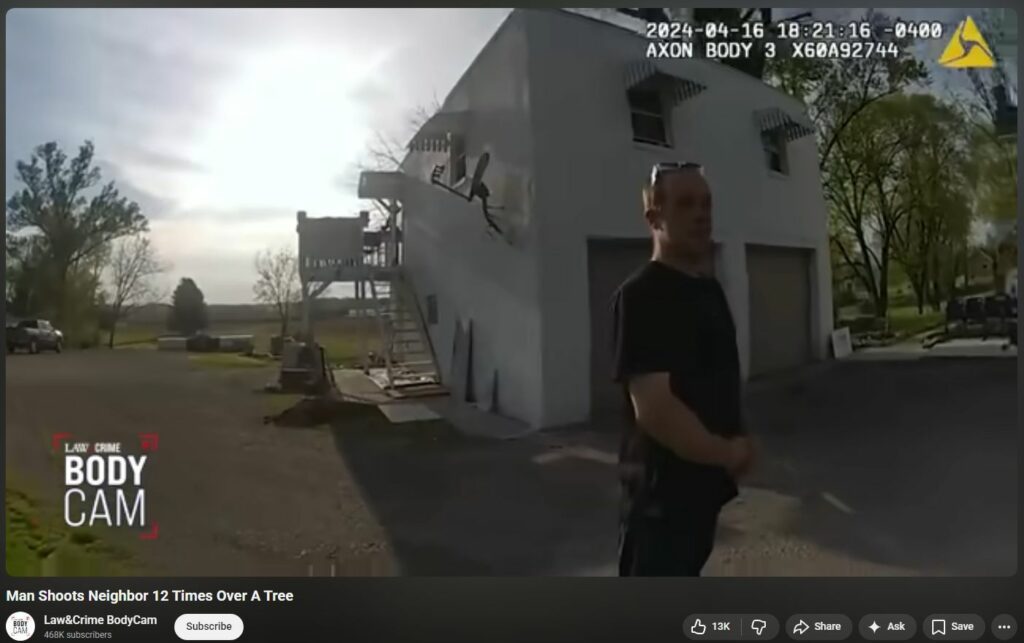
That first contact response of “Somebody’s been shot” is chillingly psychopathic.
16:50 mugshot shows what the Japanese call “San Paku” or “3 whites” to the eyes, indicating fatigue, overload, disconnection.
Psychopath next door. Be careful who you rent to, who you let around you.
Sanpaku Yin (white below iris)
- Associated with internal imbalance
- Said to reflect:
- fatigue
- emotional instability
- weakened physical condition
- Interpreted as a person being “vulnerable to outside forces”


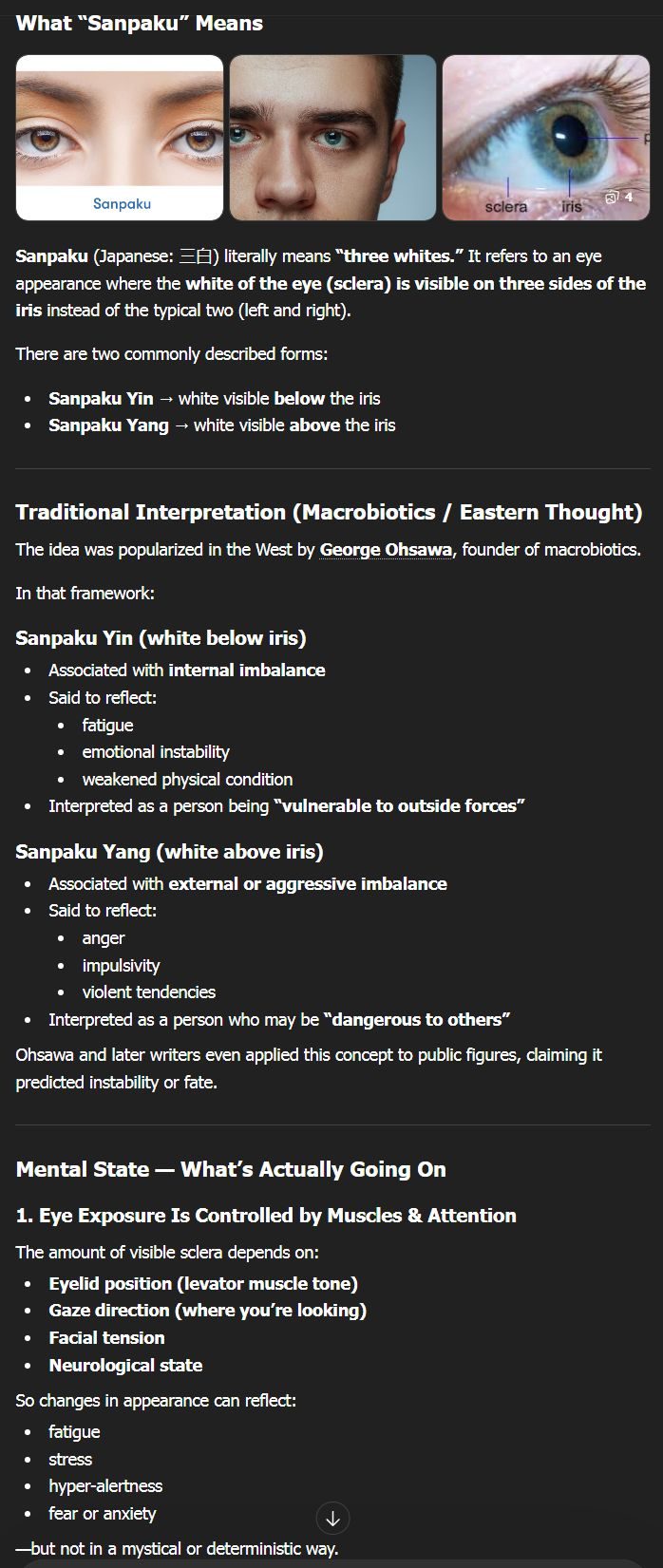
What “Sanpaku” Means
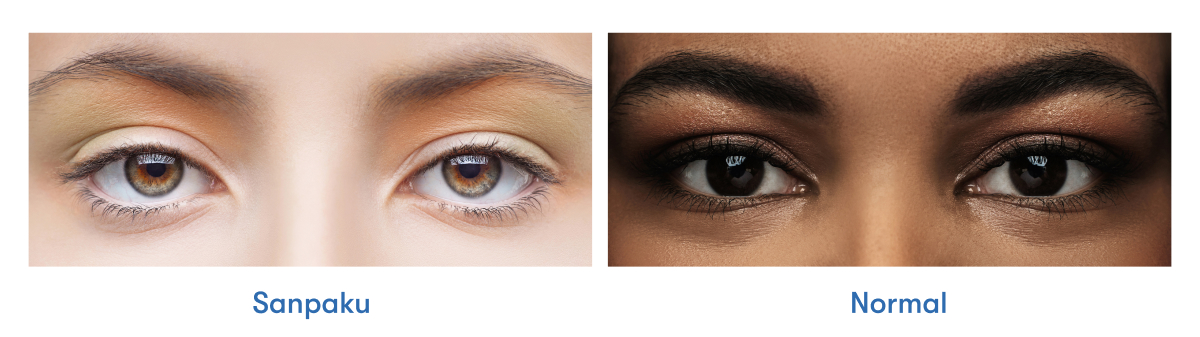
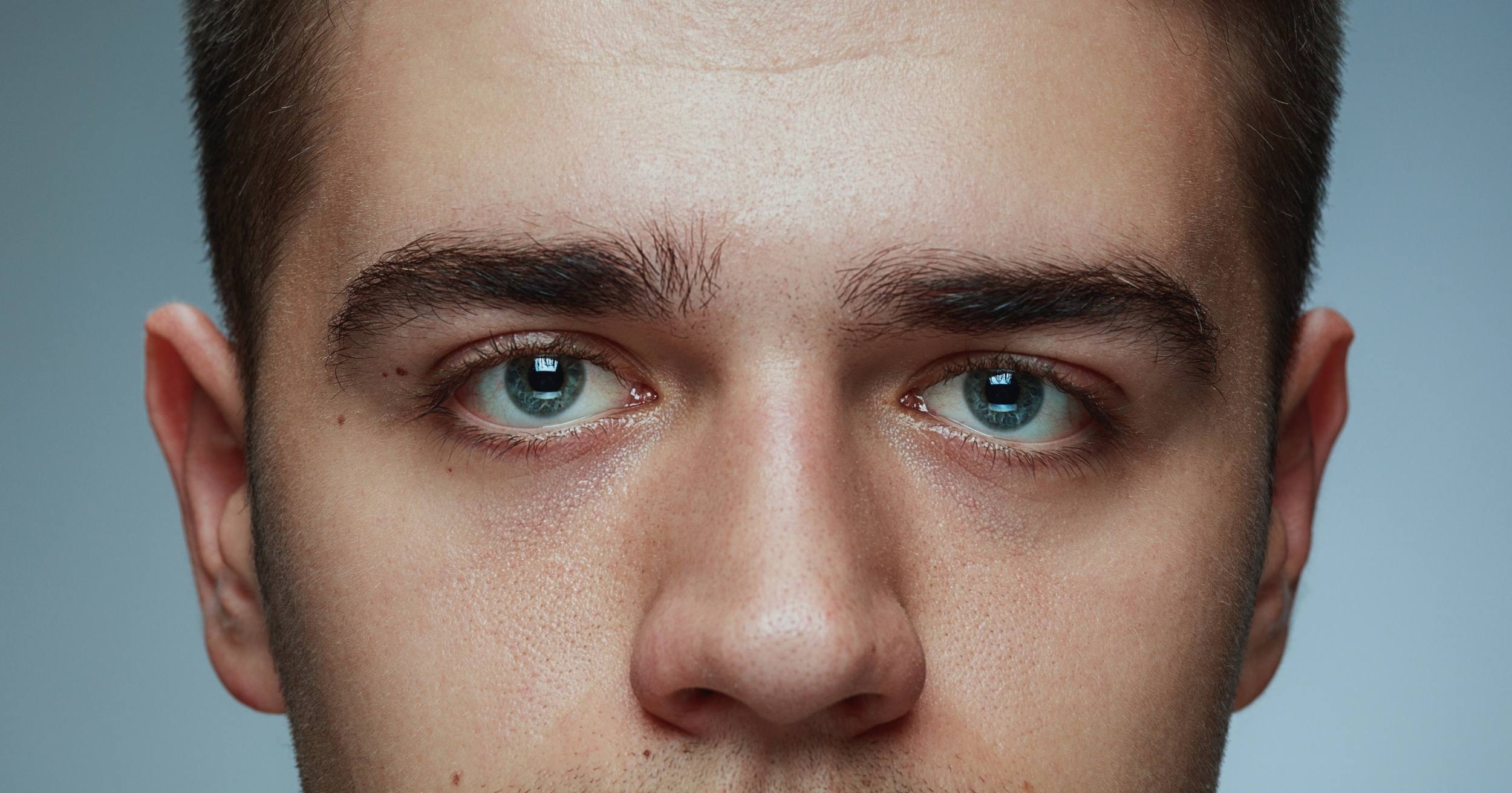
Sanpaku (Japanese: 三白) literally means “three whites.” It refers to an eye appearance where the white of the eye (sclera) is visible on three sides of the iris instead of the typical two (left and right).
There are two commonly described forms:
- Sanpaku Yin → white visible below the iris
- Sanpaku Yang → white visible above the iris
Traditional Interpretation (Macrobiotics / Eastern Thought)
The idea was popularized in the West by George Ohsawa, founder of macrobiotics.
In that framework:
Sanpaku Yin (white below iris)
- Associated with internal imbalance
- Said to reflect:
- fatigue
- emotional instability
- weakened physical condition
- Interpreted as a person being “vulnerable to outside forces”
Sanpaku Yang (white above iris)
- Associated with external or aggressive imbalance
- Said to reflect:
- anger
- impulsivity
- violent tendencies
- Interpreted as a person who may be “dangerous to others”
Ohsawa and later writers even applied this concept to public figures, claiming it predicted instability or fate.
Mental State — What’s Actually Going On
1. Eye Exposure Is Controlled by Muscles & Attention
The amount of visible sclera depends on:
- Eyelid position (levator muscle tone)
- Gaze direction (where you’re looking)
- Facial tension
- Neurological state
So changes in appearance can reflect:
- fatigue
- stress
- hyper-alertness
- fear or anxiety
—but not in a mystical or deterministic way.
2. Psychological States That Can Mimic “Sanpaku”
Certain mental or emotional conditions can produce similar eye patterns:
High Stress / Anxiety
- widened eyes
- lower eyelids pulled down
- more sclera visible
Hypervigilance
- seen in trauma or fear states
- eyes appear “open” or tense
Mania or Stimulant States
- intense staring
- reduced blinking
- upper sclera may become visible
Severe Fatigue / Illness
- drooping lids
- lower sclera visible
3. Medical / Neurological Causes
Some conditions can consistently produce sanpaku-like eyes:
- Graves’ disease
→ causes eye bulging and upper sclera visibility - Facial nerve or eyelid control issues
- Natural anatomy (some people simply have larger visible sclera)
Important Distinction
There is no scientific evidence that sanpaku:
- predicts personality
- predicts behavior
- predicts fate
It is not a diagnostic tool for mental state.
Why the Idea Persists
Sanpaku remains compelling because:
- Humans are extremely sensitive to eye cues
- Visible sclera exaggerates perceived:
- alertness
- intensity
- instability
This taps into deep psychological pattern recognition:
- “wide eyes” = danger, fear, or unpredictability
So the concept feels intuitive—even if the conclusions are exaggerated.
Bottom Line
- “Sanpaku” is a visual eye characteristic, not a proven psychological condition
- It can correlate loosely with temporary states like stress, fatigue, or alertness
- Traditional interpretations (dangerous vs vulnerable) come from macrobiotic philosophy, not clinical science